.png)
.svg)



It was an intriguing headline: “Buy Happiness — by Giving Your Money Away.”1 The premise may sound counterintuitive, yet a growing body of research suggests there may be some truth behind it. Studies by neuroscientists and economists alike have associated giving money and time with a better mood, lower blood pressure and even a longer life.
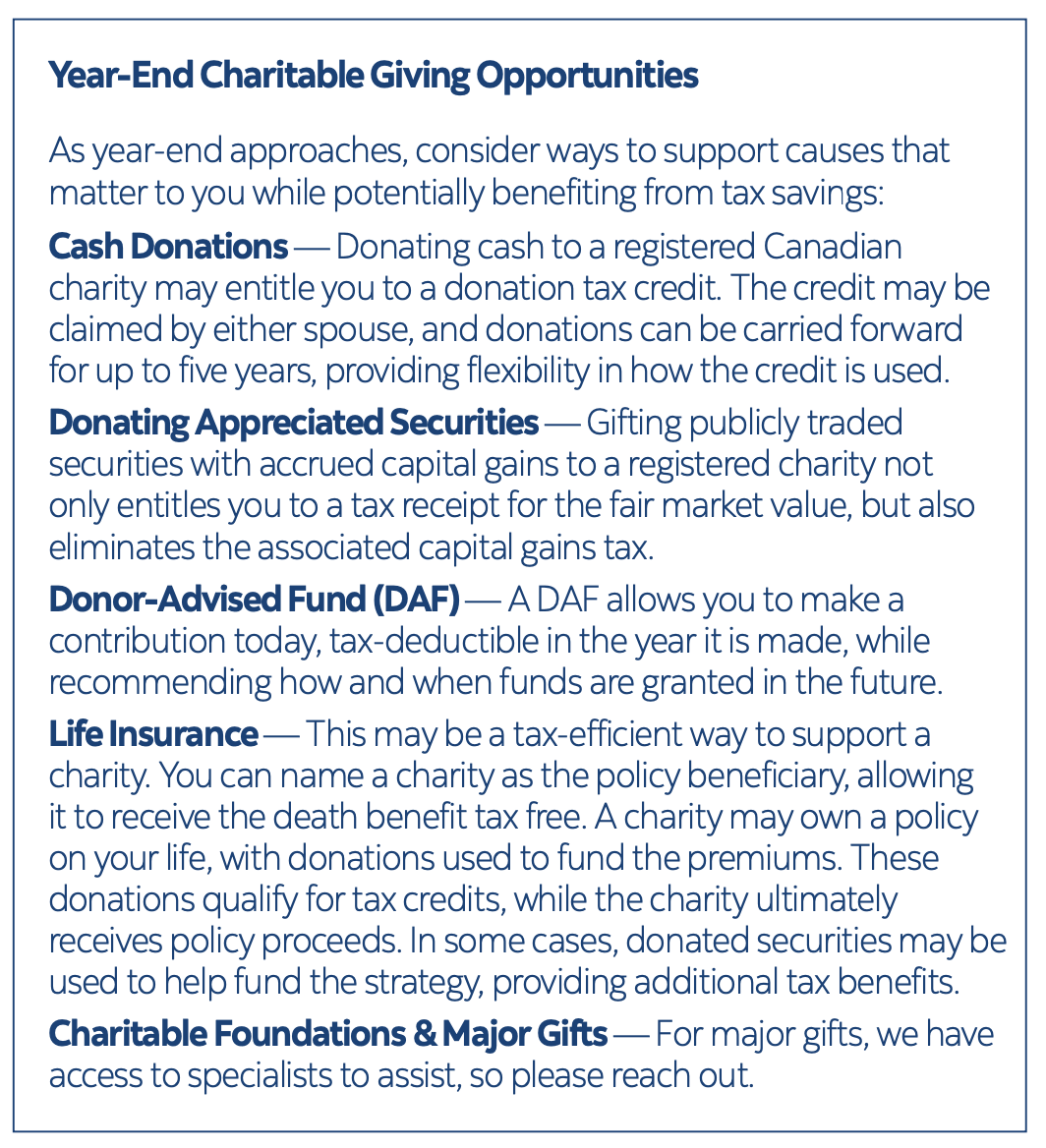
Yet both volunteering and charitable giving have been declining. Between 2018 and 2023, the share of Canadians making charitable donations fell from 68 percent to 54 percent, while volunteering declined from 79 percent to 73 percent.2 Against this backdrop, the research is especially thought-provoking: helping others may not only benefit those on the receiving end, but may also enhance our own happiness and well-being — and, in some cases, even provide tax benefits (see inset).
Consider the potential health effects. Emerging research suggests that regular volunteering may even help slow biological aging in older adults. Older volunteers also report lower rates of depression, greater life satisfaction and a stronger sense of purpose.3 Other studies have linked volunteering with a lower risk of hypertension and longer life expectancy. Acts of giving have also been associated with lower blood pressure and cortisol levels and may boost levels of feel-good brain chemicals such as dopamine and serotonin.4
The potential benefits may even extend to physical pain. In one study, participants who earned money for charity reported less pain during a tourniquet test than those who earned money for themselves. In another, participants who chose to donate money before receiving an electric shock rated the experience as less painful. Similar effects were also observed among cancer patients, who reported reduced chronic pain after performing helpful acts for others.5
As we approach the final months of the year, a time often associated with reflection and generosity, it may be worth considering the impact we can make through our time, resources or attention. While generosity undoubtedly benefits others, research suggests it may also offer some of life’s most meaningful returns: better health, greater happiness and a stronger sense of purpose.
1. https://www.wsj.com/health/wellness/how-to-donate-improve-mood-health-68b1455d;
2. https://www150.statcan.gc.ca/n1/daily-quotidien/250623/dq250623b-eng.htm;
3. https:// www.washingtonpost.com/health/2026/01/30/seniors-volunteering-health-benefits/;
4. https://newsroom.clevelandclinic.org/2022/11/28/why-volunteering-can-benefit-your-mental-health;
5. https://www.pnas.org/doi/pdf/10.1073/pnas.1911861117



.svg)
.svg)
.png)

.png)

